Introduction
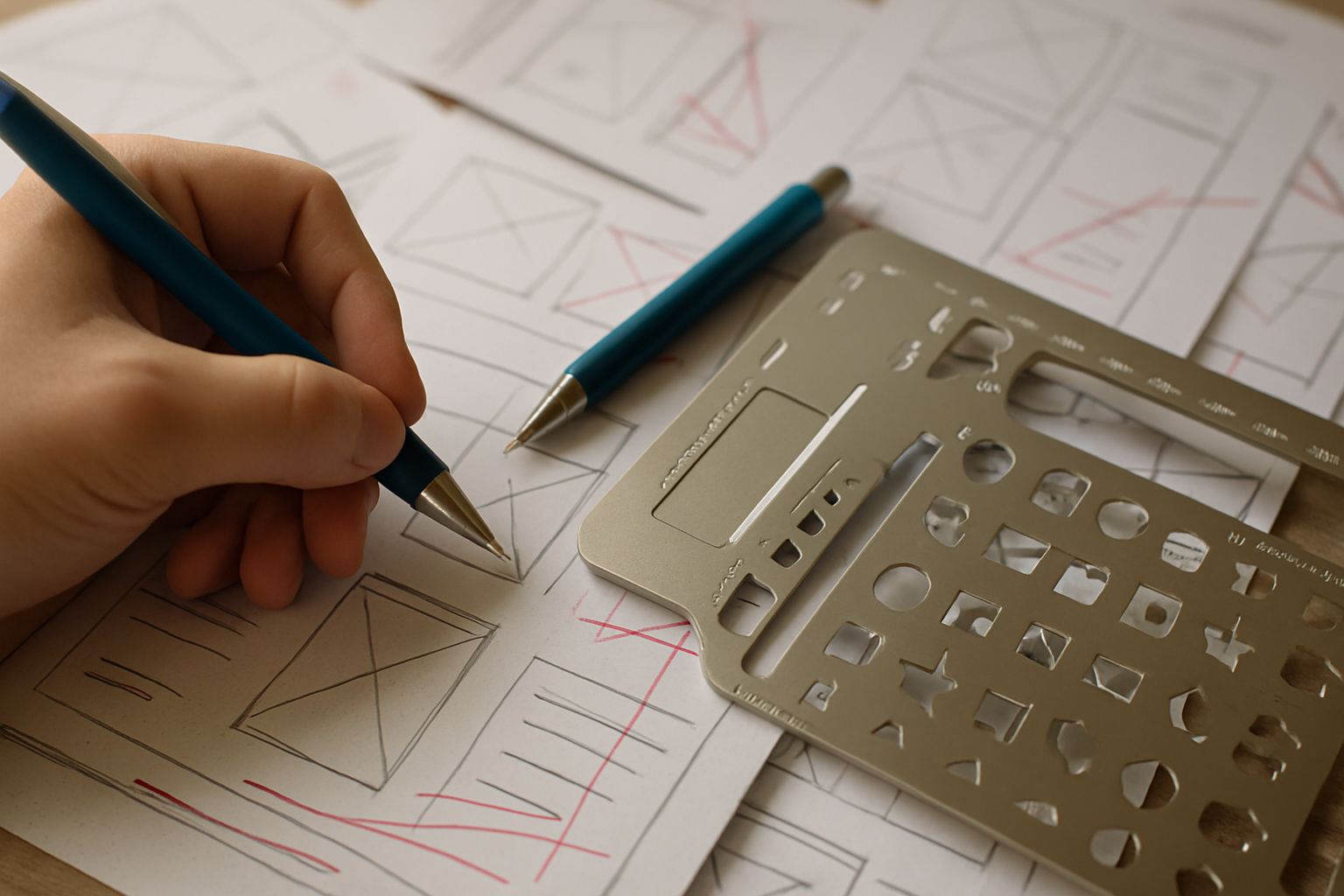
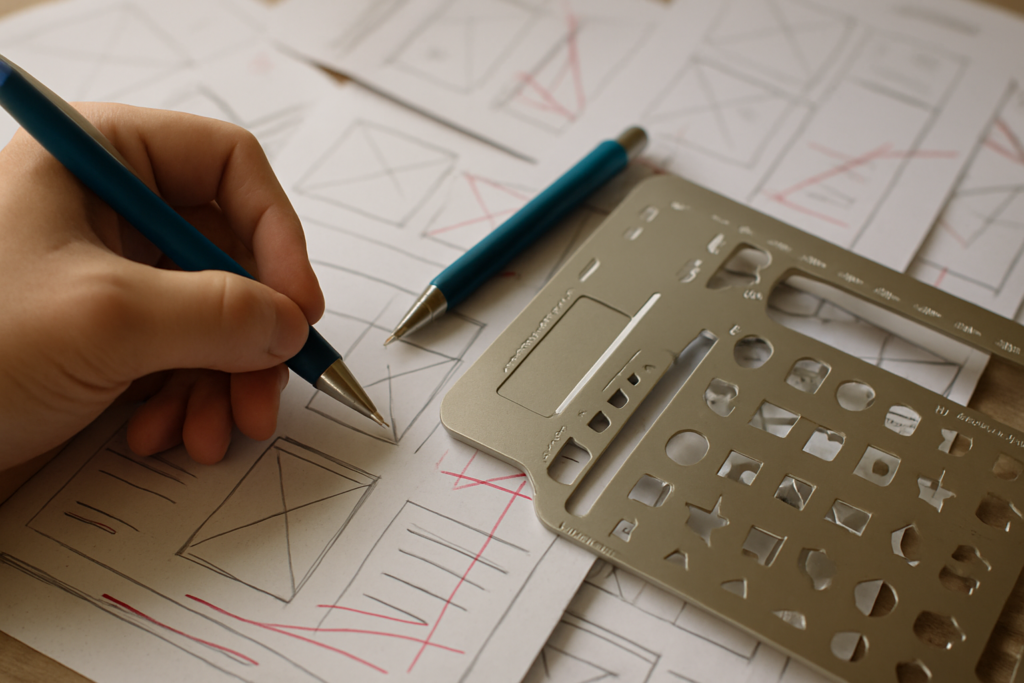
Wireframes, clickable prototypes and design systems dominate modern UX workflows — yet a surprising number of designers and founders still reach for a pen and paper first. The basics matter: sketching on paper is fast, forgiving and keeps the focus on ideas rather than pixels. If you love tactile tools, there are even dedicated stencils, sketch pads and themed t‑shirts that celebrate the craft.
Why paper still matters
There are several practical reasons to start on paper:
- Speed: No boot time, no tool menus — just a pen and an idea.
- Clarity: Rough sketches force you to prioritise layout and flow, not visual details.
- Collaboration: Paper sketches invite quick iteration with stakeholders and users in real time.
- Low cost and low commitment: You can explore many concepts without the overhead of file management or version control.
Quick tip
If you like premade helpers, stencil sets and sketch pads let you draw common UI elements faster. Some vendors also sell themed t‑shirts for enthusiasts — for example, design fans will find t‑shirts at uistencils.com.
How to use stencils and sketch pads effectively
Stencils and sketch pads are tools, not replacements for thinking. Use them to:
- Start with scenarios or user goals, not screens. What does the user need to do?
- Sketch multiple variations quickly — label each sketch with the idea behind it.
- Annotate user flows: arrows, notes and edge cases show intent beyond visuals.
- Take photos of paper sketches and add them to feedback threads or project trackers.
When to move from paper to pixels
Paper is great for exploration and alignment, but at some point you’ll want fidelity and interactivity:
- Move to digital when stakeholders need realistic layouts or when visual design decisions affect feasibility.
- Use digital tools for usability testing that requires clickable prototypes or analytics.
- Keep paper artifacts as a design memory — they can guide early-stage marketing, content or pitching materials.
Practical benefits for small businesses and brands
For startups and small teams, paper prototyping supports quick branding and content decisions without the cost of polished mockups. Early sketches help teams agree on structure and messaging before spending time on visual assets — saving time and reducing rework.
Conclusion
Old‑school sketching is not nostalgia — it’s a pragmatic step in a healthy design process. Whether you prefer blank paper or specialised stencils and sketch pads, the goal is the same: move ideas forward quickly, learn from low‑cost experiments, and only then invest in high‑fidelity designs. If you enjoy the tactile side of design, a well‑chosen stencil or a playful t‑shirt is just a nice bonus.