Tag: Control Panel

  • New partnership brings more affordable VPS with guaranteed performance

    New partnership brings more affordable VPS with guaranteed performance

    Introduction

    We’ve extended our hosting partnerships to include the largest datacenter in France. The result: more affordable VPS packages for customers, delivered from premium infrastructure with guaranteed responsiveness. Whether you need autonomy, performance or a managed option, the new setup aims to give you clearer choices without sacrificing speed.

    What’s new

    Cheaper VPS plans delivered from a major French datacenter, combined with a guarantee on service speed and the same control you expect from a VPS — SSH/ROOT access, resource control and choice of control panel.

    Why choose a VPS

    VPS hosting sits between shared hosting and dedicated servers: you get a slice of a physical server that behaves like an independent machine. That makes it a good choice for growing websites, applications and projects that need reliable resources and more control.

    Key benefits

    • Autonomy: full SSH and ROOT access so you can configure the environment as you need.
    • Resource control: you own and manage your CPU, RAM and disk allocation.
    • Choice of control panel: install the control panel you prefer.
    • Monitoring and statistics: track performance and usage in real time.
    • Isolation: your VPS isn’t affected by other users on the same physical host.

    What the new datacenter partnership means

    By partnering with the largest datacenter in France we can place VPS instances on high‑end infrastructure and pass on cost efficiencies to customers. The announcement focuses on two practical outcomes:

    • More economical VPS plans without compromising speed or reliability.
    • A guaranteed level of responsiveness from the service delivered in that facility.

    Support and management options

    As with any VPS, full SSH and root access means many users will choose to manage and troubleshoot their server themselves. If you prefer not to handle system administration, there are support packages available that combine with VPS plans so you can get professional help and relax.

    How our support works

    • If you know how to use SSH and manage Linux, you can handle most tasks on your own.
    • For those who prefer not to manage the server, optional paid support packages provide scheduled or on-demand help.
    • Even without a support package, you can contact our technical team; assistance is available for a nominal hourly fee where required.

    Ready to pick a VPS?

    Explore all available VPS packages and the datacenter locations we use, then choose the setup that fits your needs: See VPS plans and datacenter details.

    How to choose the right VPS package

    When comparing packages, consider these practical points:

    1. Resources: CPU, RAM, disk type and I/O limits should match your workload.
    2. Network and location: choose a datacenter close to your audience for lower latency.
    3. Control and access: confirm SSH/ROOT availability and control panel options.
    4. Support: decide if you need a managed plan or occasional professional help.
    5. Monitoring and backups: check available monitoring tools and backup options.

    Conclusion

    Our expansion into France’s largest datacenter means more cost‑effective VPS options without giving up performance or control. Whether you’re self‑managing with full root access or prefer an added support package, you can choose the combination of price, power and assistance that works for you. Check the VPS plans and datacenter locations to find the right fit.
  • Become Our Partner — Integrate Your Internet Service with easy.gr

    Become Our Partner — Integrate Your Internet Service with easy.gr

    Bring your internet service to thousands of users

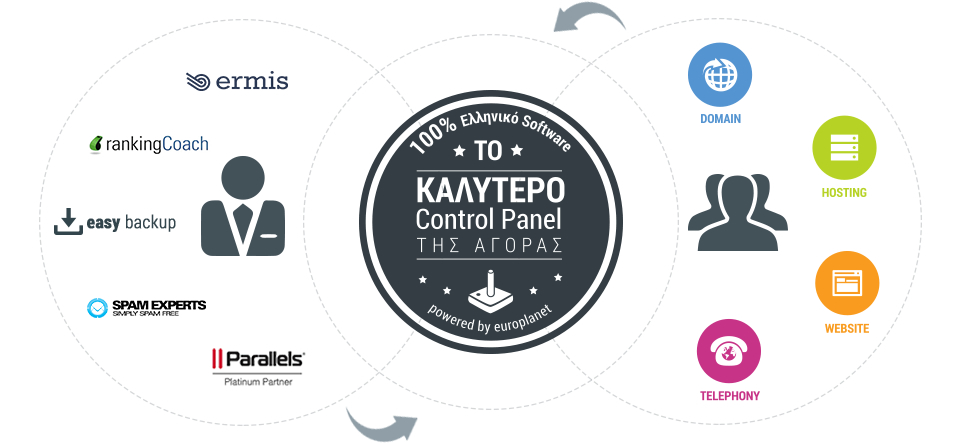
    Have an idea or an internet service and want it available inside a popular control panel used by thousands of easy.gr customers? Whether you already have your own API or you need technical help to build one, easy.gr invites you to partner with us. Join what the source describes as the largest and fastest-growing unified internet services management system and let your idea reach the audience it deserves.

    Who this is for

    • Developers and companies with API‑driven internet services who want direct distribution to end users.
    • Teams or creators with a service concept that needs integration and exposure through an established control panel.
    • Partners who prefer to focus on their product while relying on easy.gr for distribution and platform integration.

    How integration works

    Integration is straightforward and flexible:

    1. If you have an API: we can connect your existing API to our control panel so users can discover and use your service directly from easy.gr.
    2. If you need help: if you don’t yet have an API, our team can assist in building the interface needed to integrate your service into the panel.
    3. Go live: once integrated, your service becomes discoverable to easy.gr’s user base through the unified management interface.

    Typical steps we follow

    • Initial contact and concept review.
    • Technical assessment: API requirements and integration plan.
    • Implementation: connect the API or build the necessary endpoints with our support.
    • Testing and rollout inside the control panel.

    Why partner with easy.gr

    • Access: integrate directly into a platform used by thousands of customers.
    • Simplicity: users manage services from a single control panel, lowering friction and improving adoption.
    • Support: you can bring a ready API or ask for development help to make integration smoother.
    • Visibility: your service gains placement inside an expanding unified services ecosystem.

    Ready to get started?

    If you want your service inside the easy.gr control panel, reach out and tell us about your idea. Whether you already have an API or need our help to build one, we’ll review the opportunity and guide you through the integration process.

    Conclusion

    Integrating with easy.gr is an opportunity to bring your internet product to a broad audience without building your own user-facing portal. If your idea or service can be delivered via an API — or you’d like our help to create one — consider partnering with easy.gr to give your solution the exposure and management it deserves.

  • Coming Back from WHD.global 2015: Parallels Becomes Odin and What We Took Home

    Coming Back from WHD.global 2015: Parallels Becomes Odin and What We Took Home

    Introduction

    Coming Back from WHD.global 2015: Parallels Becomes Odin and What We Took Home — whd.global2015

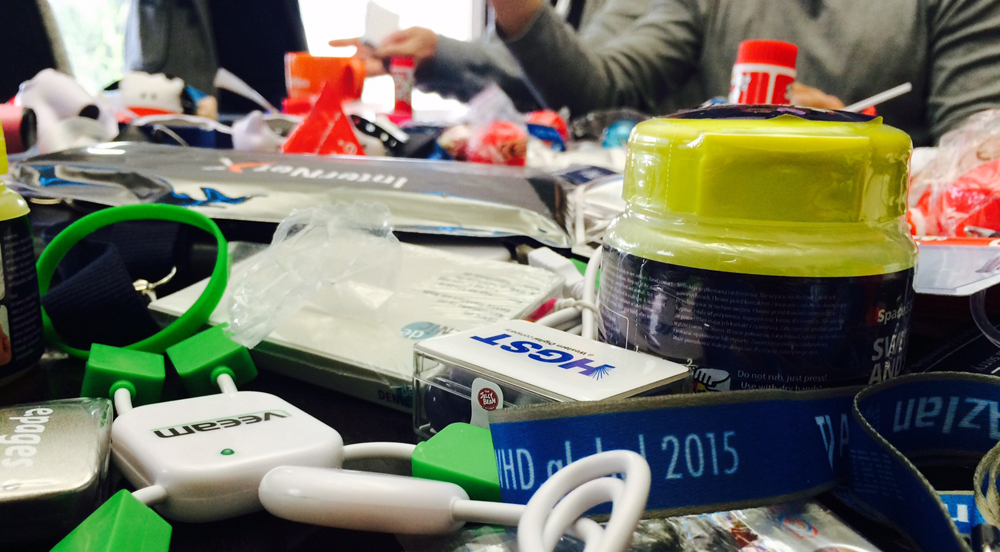
    We just returned from WHD.global 2015, a busy week where the global internet industry gathered to show new ideas, announce plans and build partnerships. The show was packed with announcements, gadgets and conversations — and a few moments that felt like a real turning point for the market.

    Quick highlight

    One of the biggest surprises was Parallels’ overnight transformation into Odin — a change announced on the show floor that signals a broader shift from a single control-panel product toward a wider portfolio of solutions.

    Parallels → Odin: more than a new name

    Perhaps the most talked-about moment at the event was Parallels’ public rebrand toOdin. It was an unusually immediate, exhibition-time announcement: overnight the company presented itself with a new identity. The message was clear — the platform is moving beyond the image of a single "Plesk Control Panel" product and positioning itself as a provider of a broader set of solutions for hosting providers and ISPs.

    gTLDs and the domain market

    Conversations about generic top-level domains (gTLDs) were everywhere. With the gTLD rollout at a peculiar crossroads, many attendees predicted the arrival of more specialized gTLDs aimed at segmenting the market and serving narrower industry verticals. The general view was that increased specialization could help gTLDs grow by addressing specific professions and audiences.

    Security, antispam and product quality

    Security and antispam solutions were recurring themes. Providers highlighted new antispam services, stronger security features and improvements in overall product quality. Those messages came alongside practical demos and giveaways — small but smart gadgets used by exhibitors to engage visitors.

    The atmosphere vs. the local scene

    The general mood on the show floor was upbeat and energetic — a contrast we still feel when looking at the stagnation that affects parts of the Greek Internet market. The difference was striking: international momentum, talks of investment and innovation, and many new ideas in motion.

    What this means for easy.gr

    At easy.gr we won’t stop at admiring gadgets. The energy and the contacts from WHD.global 2015 will be channelled into creative collaborations and service improvements. Our aim is to keep delivering useful, high-quality services that are easy to acquire and even easier to manage — all through the unique easy.gr control panel.

    Conclusion

    WHD.global 2015 left us inspired. From the Parallels→Odin announcement to renewed conversations about gTLDs and security, the show reinforced that the internet ecosystem keeps evolving fast. We plan to bring that momentum back home — improving our services and working with partners to offer better tools for customers in Greece and beyond.

  • When Parallels Became Odin: A Rebrand with Hosting Ambitions

    When Parallels Became Odin: A Rebrand with Hosting Ambitions

    A new name, a familiar mission

    When Parallels Became Odin: A Rebrand with Hosting Ambitions — parallels
    When Parallels Became Odin: A Rebrand with Hosting Ambitions — odin

    Key fact

    On March 25, 2015, at World Hosting Days 2015, Parallels — the company best known for control panel products such as Plesk — announced it would continue its business under the new name Odin. The rebrand expands the company’s positioning while keeping existing services intact.

    The technology world loves a dramatic rename, but not all rebrands are purely cosmetic. When Parallels unveiled its new identity as Odin during World Hosting Days 2015, the announcement was positioned as more than a change of label: it was a statement about direction. Odin would keep the familiar tools partners rely on — Plesk control panels, SiteBuilder, cloud web hosting and webmail management — while broadening its solutions to reach larger and more specialised business groups.

    Why the rebrand matters

    A name change can be a signal of strategic evolution. In Odin’s case the company emphasised three practical points:

    • It is not abandoning existing products or customers — services are preserved and expanded rather than retired.
    • It aims to offer more specialised solutions beyond a single control panel, addressing broader hosting, cloud and business needs.
    • The rebrand was unveiled at a major industry event (World Hosting Days), underlining a global ambition.

    What Odin brings to the table

    Partners and hosting providers who already knew Parallels for Plesk and related tools were reassured that the familiar building blocks remain. At the same time, Odin positioned itself as a provider of a wider portfolio:

    • Plesk and other control-panel technologies as core management tools.
    • Cloud web hosting platforms and hosting resources for growing sites and services.
    • Site building and webmail management integrated into broader hosting stacks.
    • New, more specialised offerings designed to target larger enterprise and business groups.

    What it means for partners in Greece

    As the company re-emerged under the Odin name, existing partnerships continued. The local Platinum partner — one of Odin’s closest allies in the region — highlighted pride in staying alongside the vendor through the change. For partners this generally translates to:

    • Continuity of service and compatibility with existing deployments.
    • Potential access to a broader product set aimed at enterprise and specialised use cases.
    • Opportunities to expand offerings to customers without disrupting current operations.

    Practical steps for hosting providers

    If you’re an ISP, reseller or hosting company that relies on Parallels-era products, consider these practical checks:

    1. Confirm roadmap and support commitments for your current control-panel and hosting stack.
    2. Review new Odin solutions for features that could unlock higher-value customers.
    3. Plan communications to reassure end customers that services and billing are unaffected by the name change.
    4. Evaluate integration or migration paths only if new offerings offer concrete business advantages.

    Conclusion

    Rebrands can be risky, but they can also reflect real strategic shifts. Odin’s transition from Parallels — announced publicly at World Hosting Days on March 25, 2015 — made a clear point: the company intended to broaden its scope while preserving the tools that partners depend on. For hosting providers and partners, the sensible response is to verify continuity, explore new opportunities in the expanded portfolio, and communicate stability to customers as the vendor evolves.

  • Accredited Nominet Registrar: Easy now offers .uk domains plus hosting and site tools

    Accredited Nominet Registrar: Easy now offers .uk domains plus hosting and site tools

    We’ve expanded our domain services with official accreditation from Nominet, the UK’s domain registry. That means you can register, manage and host domains with the.uk family of extensions through our platform — and pair them with the hosting and website tools you already use.

    What this means for you

    As an accredited registrar of the official British registry (Nominet), we now offer direct registration and management for the following extensions:

    • .uk
    • .co.uk
    • .org.uk
    • .net.uk
    • .me.uk

    You can register these domains and manage DNS and other settings from the same account where you host, build and promote your site.

    Register and manage.uk domains

    If you need a UK-focused domain for your business or project, the new registrar status makes it straightforward to search, register and maintain those names alongside your existing domains. Management happens from our Control Panel where DNS, WHOIS and renewal options are kept together for convenience.

    Hosting options and data centre locations

    Domains can be hosted on any of our hundreds of reliable servers. You can choose the data centre that best fits your audience and performance needs:

    • Greece
    • Europe
    • America
    • Canada

    Build and promote your website

    Once you have a domain, you can create a site easily with ourSitebuilderand improve its visibility using the SEO tools in theWebsitecategory or the standaloneSEOproduct. These tools are designed to work together so you can go from domain registration to a live, optimised site without switching platforms.

    Manage everything from a single Control Panel

    Administration is centralised through our Control Panel, so domain settings, hosting resources and website tools are all in one place. Access it here:Control Panel.

    Quick steps to get started

    1. Search for and register a.uk (or.co.uk/.org.uk/.net.uk/.me.uk) domain.
    2. Choose a data centre for hosting — Greece, Europe, America or Canada.
    3. Build your site with Sitebuilder or upload an existing site.
    4. Use the SEO tools to optimise for search engines.
    5. Manage renewals, DNS and settings from the Control Panel.

    In short

    Becoming an accredited Nominet registrar means smoother access to UK domain names and tighter integration with hosting and website tools. If your audience is in the UK or you want a UK-branded web presence, you can now register and manage those domains alongside your other services in one place.

  • Become a Domains & Hosting Reseller with Our WHMCS Module

    Become a Domains & Hosting Reseller with Our WHMCS Module

    Introduction

    If you run an online business and want your customers to register domain names or buy hosting directly through your website, we built a reseller solution to make that simple. After a year of development and legal review, our WHMCS module links your shop with the easy.gr platform so you can sell domains and hosting under your own brand while keeping access to the platform’s services and discounts.

    What the WHMCS module does

    The module provides a complete flow for domain registration and management inside WHMCS while remaining fully compatible with your easy.gr account. Key features include:

    • Support for all active TLDs available on easy.gr, including the latest gTLDs (for example.BAR,.BIKE,.GALLERY,.DOMAINS,.HOSTING).
    • Bi-directional integration: manage domains from your WHMCS storefront or directly from easy.gr without losing access to included free services.
    • White-label behaviour: your customers transact on your website; easy.gr branding is not exposed in sales documents (except where required by official registry communications for.GR).
    • Automated billing using the credits in your easy.gr account — domain purchases deduct from your account’s credits immediately.
    • Free distribution: the WHMCS module is provided at no cost to resellers.

    Compliance with.GR rules and EETT

    The module was developed after a year of study and addresses legal and regulatory requirements related to.GR registrations. It implements the changes introduced by EETT that took effect on 01/11/2011 and aligns registry–registrar–registrant relationships accordingly. At the same time it supports the specifications required by other registries for.eu,.com and other gTLDs.

    Integration with easy.gr and white‑label control

    Special attention was given to integration with easy.gr’s dynamic control panel. The module works with your existing easy.gr account and leverages any volume discounts you already have (discounts can be up to 30% as applied on your account). The combined systems let you:

    • Sell hosting and domain services from your website (via WHMCS) while customers receive all standard included services for each domain.
    • Keep your branding visible—easy by Europlanet is not shown in your transactional documents, except where the official registry (for.GR) sends a copy of the registration email to the domain owner.

    What you need to get started

    • An active account at easy.gr — the module uses your existing account and credits.
    • A WHMCS installation where you can install modules and connect via the WHMCS API.
    • Access to the WHMCS API installation instructions in your easy.gr account (you’ll find setup documentation in the WHMCS API section of your dashboard).

    Benefits for your business

    1. Expand your product offering with domains and hosting without building registry integrations yourself.
    2. Preserve your brand front‑end while relying on easy.gr for registry compliance and service delivery.
    3. Automate billing and order fulfillment through WHMCS and your easy.gr credits.
    4. Access free additional services included with each domain registration—no third‑party logos or ads.
    5. Offer the same portfolio of TLDs that easy.gr supports, including new gTLDs.

    Installation, support and next steps

    The module is available for free. Installation guides and configuration details are located inside your easy.gr account under the WHMCS API section. If you need assistance at any step, an experienced partner from our team can guide you through setup and configuration.

    Ready to resell?

    To start: create or sign in to your easy.gr account, open the WHMCS API section to follow the installation instructions, and enable the module in your WHMCS installation. If you run into issues, contact our support team and a specialist will assist you through every step.

    Conclusion

    This WHMCS module removes the technical and regulatory friction of offering domains and hosting from your own storefront. It combines legal compliance for.GR, full support for gTLDs, white‑label selling and automated billing through your easy.gr credits—so you can grow your business and offer complete services to your customers with minimal effort.

  • Knobs, Buttons & Potentiometers: Tuning Your VPS Like an Instrument

    Knobs, Buttons & Potentiometers: Tuning Your VPS Like an Instrument

    VPS control panel metaphor - knobs and buttons

    Introduction

    Knobs, buttons and potentiometers are physical controls used to shape sound and behavior on an instrument or a piece of hardware. The same idea applies to a Virtual Private Server (VPS): the choices you make about CPU, memory, storage and control interfaces are the knobs that determine how your service performs. This article translates that metaphor into practical advice for tuning a VPS to your website, app or business workload.

    Quick pointer

    If you want to experiment with a VPS and try tuning resources yourself, you can build one quickly here: http://easy.gr/el/hosting/vps

    Why the "knobs and buttons" metaphor works for VPS

    Unlike shared hosting, a VPS gives you dedicated slices of resources. That means you can change configuration parameters and see predictable effects—like turning a knob. Examples include:

    • CPU allocation: more cores or higher clock availability often reduce processing bottlenecks.
    • RAM: increasing memory helps with caching and handling concurrent connections.
    • Storage type and I/O: SSD vs. HDD and IOPS limits affect load times and database performance.
    • Network bandwidth and limits: affect responsiveness for geographically dispersed users and high-traffic pages.

    Which "knobs" should you prioritize?

    Not every site needs every resource turned up to maximum. Prioritize based on the type of workload:

    Static websites and content-focused sites

    • Prioritize storage speed (fast reads) and a modest CPU/RAM balance.
    • Use a CDN for global performance—this can be a more cost-effective knob than dramatically increasing VPS resources.

    Dynamically generated sites and web apps

    • Increase RAM and CPU to reduce response latency under load.
    • Consider separating database and application tiers (two smaller VPS instances tuned to each role).

    Databases and heavy compute tasks

    • Prioritize RAM and storage IOPS to improve query performance.
    • Adjust swapping behavior and filesystem choices where available.

    Control panels: the buttons and dials that make tuning easier

    A good control panel turns low-level server options into easy, reversible actions. Look for panels that let you:

    • Resize resources (CPU, RAM, storage) without long downtime.
    • Manage snapshots and backups for quick rollback.
    • Configure firewall rules, SSH access and simple monitoring.

    These conveniences let you experiment: raise a resource, measure results, and roll back if needed.

    Monitoring: your ears while you tweak

    Tuning without feedback is guesswork. Use monitoring to measure the effects of each change:

    • Track CPU and memory usage trends over time.
    • Measure response times for representative pages or API calls.
    • Watch disk I/O and network throughput during peak periods.

    Small, repeatable tests make it easier to correlate a change with its impact.

    Practical checklist to tune your VPS

    1. Identify the bottleneck: CPU, RAM, disk, or network.
    2. Apply one change at a time (increase RAM, switch to faster storage, tweak caching settings).
    3. Measure performance before and after the change for at least a typical traffic cycle.
    4. Keep backups or snapshots before major alterations.
    5. If growth continues, consider splitting roles (web, db, cache) across multiple instances.

    Start tuning

    Need a VPS to experiment with? Create and configure your own VPS quickly: Build your VPS at easy.gr

    When to call in help

    If tuning reaches infrastructure limits or you need higher availability, consider managed options or professional support. Managed providers can help with capacity planning, monitoring and routine optimizations so you can focus on your application or business.

    Conclusion

    Think of a VPS like a musical instrument: small, thoughtful turns of the knobs often produce the biggest improvements. Start with measurement, make incremental changes through an easy-to-use control panel, and walk back if something doesn’t help. With that approach you’ll get reliable performance while using resources efficiently.

  • Our New easy.gr Is Live — same services, smarter platform

    Our New easy.gr Is Live — same services, smarter platform

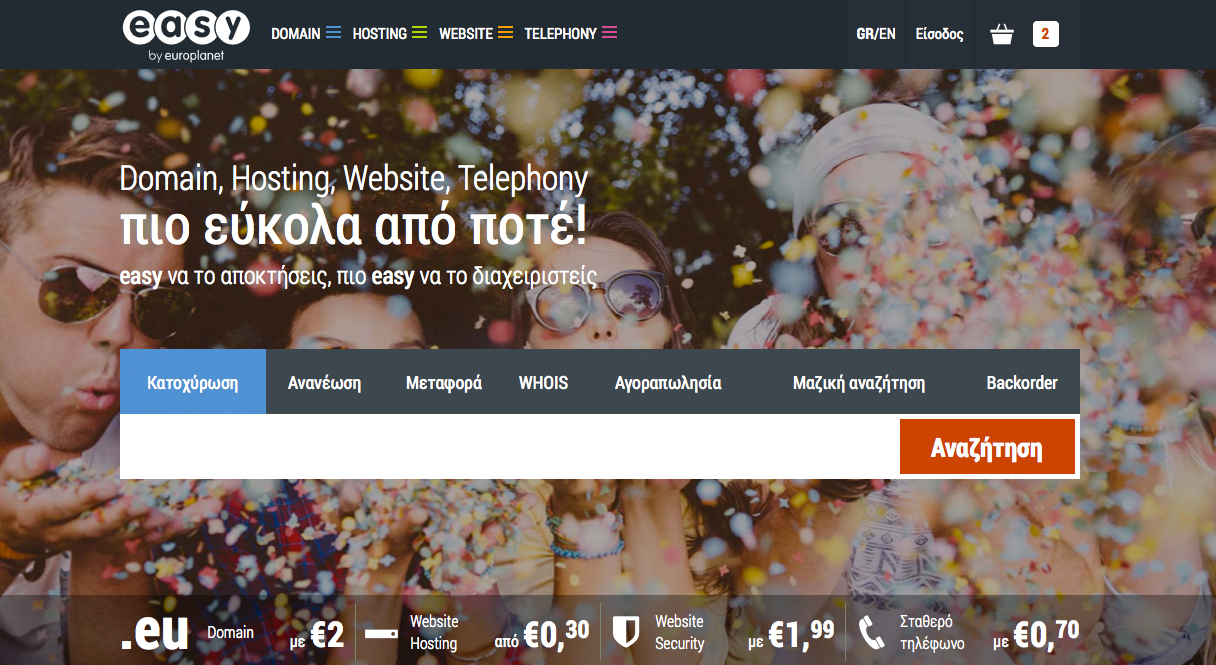
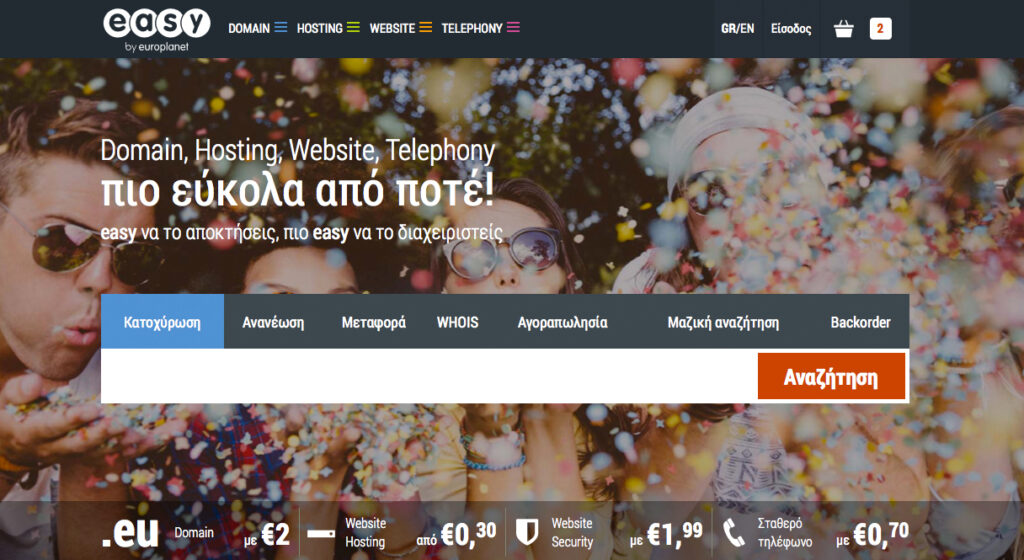
    easy.gr new platform screenshot

    Welcome to the new easy.gr

    From Monday 17/11 our redesigned site easy.gr is live. It brings all our services together through an improved, user-friendly Control Panel — and all your data has already been migrated securely. Read on for a quick guide to what changed and what to do next.

    What changed and why it matters

    The main change is a single, upgraded platform that consolidates our services and puts them inside a more advanced and easier-to-use Control Panel. The goal is to make routine tasks faster and reduce friction so you can focus on what matters: your website and business.

    What we moved

    • All account data and settings were migrated to the new platform.
    • Service access is now unified via the new Control Panel.
    • Data transfer was completed securely — you don’t need to take action to move your existing information.

    How this affects you

    • Login with your usual credentials and explore the new Control Panel interface.
    • You should find the same services available, now organized in one place for convenience.
    • Routine tasks may feel faster thanks to the redesigned workflow.

    Quick checklist — what to do next

    1. Log in and familiarise yourself: Sign into easy.gr and take a tour of the Control Panel. Update any bookmarks if needed.
    2. Check your services: Open your hosting, domains or email sections and confirm your settings look correct.
    3. Test critical functionality: Visit your website, send/receive a test email, or access webmail to make sure everything is working as expected.
    4. Update contact preferences: Review your profile and contact details so notifications reach you.

    If you find problems

    Although the migration was completed successfully and securely, small issues can happen. If you notice any problem or unexpected behaviour, please let us know immediately so we can investigate and fix it.

    • Report anything unusual through our usual support channels.
    • Include screenshots and steps to reproduce the issue when possible — it helps us resolve things faster.

    Final note

    Welcome to the new easy.gr — a more streamlined platform designed to make your life easier. All your data has already been moved safely; now it’s time to explore the new Control Panel and enjoy the updated experience. If you need help, our support team is ready to assist.