
Tag: Automation

  • AI and e-commerce

    AI and e-commerce

    Illustration of an AI assistant in an e-commerce environment with products, customer support, product recommendations and sales analytics.

    AI that actually helps your online store

    Artificial intelligence is no longer something only large platforms and tech giants can use. Even a small or mid-sized online store can apply AI to work faster, present products more effectively and support customers with greater consistency.

    The point is not to add AI everywhere, but to use it where it solves real problems: product descriptions, customer support, marketing, recommendations and data analysis.

    Quick checklist: Where AI delivers fast wins

    • Generate first drafts of product descriptions for editors to refine.
    • Power recommendations that respond to behavior and past purchases.
    • Automate answers to common support questions tied to your knowledge base.
    • Use AI to draft campaign copy and test variations faster.
    • Analyze sales and funnel data to spot improvement opportunities.

    Product descriptions without starting from scratch

    Writing product descriptions becomes slow and repetitive when your catalogue grows. AI can produce a first draft from product features, audience and brand tone. A human should review, edit and adapt the final version.

    Best practice: let AI create the first draft; keep final decisions with your team so accuracy and brand voice are preserved.

    Smarter product recommendations

    AI helps recommend products based on behavior, preferences, previous purchases and common searches. The value is not showing more items but showing the right items at the right moment—helping customers find what they need faster.

    Customer support that reduces waiting time

    AI assistants can handle routine questions about orders, shipping, returns, payments and availability. When they’re connected to a well-structured knowledge base, they reduce response time and let human agents focus on complex cases.

    Marketing and campaign support

    Use AI to draft email campaigns, headlines, ad copy and social captions. It accelerates the creative process and supplies more ideas to test; it does not replace your strategy.

    Sales and behaviour analysis

    Online stores generate lots of signals—page views, cart additions, drop-offs and category performance. AI can help interpret that data and turn numbers into actionable decisions: identify pages that need better descriptions, find cross-sell opportunities or spot underperforming products.

    Where you should be careful

    AI must not publish product descriptions, prices, return policies or technical specifications without review. Errors in details such as warranty or availability can quickly damage customer trust.

    Be cautious with customer data: do not upload personal information into tools without understanding their privacy policies and compliance requirements.

    Common mistakes to avoid

    1. Publishing AI content without human review: AI can make factual mistakes or produce generic text.
    2. Using the same style for every product: repetitive descriptions lower perceived quality.
    3. Adding a chatbot that does not solve real problems: a non-helpful bot frustrates customers.
    4. Ignoring data: AI is most effective when it works with real store data, not assumptions.
    5. Using AI without a privacy policy that covers how customer data is handled.

    Frequently asked questions

    Can AI write all product descriptions?It can help significantly, but every description should be reviewed before publication.

    Can AI increase sales?It can support sales by improving content, making recommendations more relevant, speeding up support and clarifying data-driven decisions.

    Does AI only make sense for large stores?No. Small e-commerce businesses can save time on descriptions, emails and customer support and gain insights from their own data.

    Conclusion

    AI can be a practical, valuable tool for any online store when used with clear objectives and human oversight. Its real value lies in speeding up routine work, improving the customer experience and extracting better insights from the data your shop already produces.

    Want to explore AI for your e-shop?

    Easy provides guides and resources to help online stores apply AI smartly—drafting content, improving recommendations and automating support without losing control. Learn more at Easy.


  • AI tools for small / medium business

    AI tools for small / medium business

    Illustration of an AI assistant on a laptop with digital tools for content creation, marketing, customer support, analytics and automation.

    Introduction: AI at a human scale

    Not long ago, artificial intelligence belonged to teams of engineers and data scientists. Today, many AI tools are accessible to non-technical users and can make daily work faster and less repetitive. The aim isn't to collect every shiny tool — it's to pick solutions that solve real business problems and free up time for higher-value work.

    Start small: where to focus first

    Pick one high‑impact task — the one that consumes the most time — and test AI there. Typical starting points:

    • Content drafts (product descriptions, newsletters)
    • Answering frequent customer questions
    • Summarizing meeting notes and documents

    Measure results, adjust prompts and guard sensitive data. Small wins compound quickly.

    Content creation: draft faster, keep the voice

    Content generation is one of the most mature uses of AI. Tools can produce article drafts, product descriptions, email templates, FAQs and social captions in seconds. Use them as a starting point — edit to add your expertise and brand tone.

    • Generate multiple headline or caption options and A/B test what works.
    • Ask the AI for different tones: professional, playful, concise or explanatory.
    • Reuse prompts that give consistently good results to speed future work.

    Customer support: faster, more consistent answers

    AI assistants can handle routine requests, point visitors to relevant pages, and reduce response times for common questions. When they’re connected to a well-structured knowledge base, they deliver consistent answers around the clock.

    • Use AI for first-level support and to triage tickets for human agents.
    • Keep an escalation path for complex, legal or financial questions.
    • Continuously update the underlying knowledge base so answers stay accurate.

    Marketing and social media: ideas and scale

    AI can help generate campaign ideas, ad copy, publishing schedules and social media captions. It’s especially useful when you need several creative variations quickly.

    • Automate content calendars and bulk caption generation, then human-edit for brand fit.
    • Ask AI to rewrite copy for different channels (email, Instagram, LinkedIn).
    • Use generated lists of keywords or hashtags as starting points for SEO and discovery.

    Organizing everyday work: less admin, more focus

    AI can summarize long documents, turn meetings into action lists, organize notes and find information faster. That reduces time spent on repetitive admin and gives teams more capacity for important decisions.

    • Turn meeting transcripts into concise summaries and assigned tasks.
    • Automatically extract contact details, deadlines and action items from documents.
    • Use searchable summaries to make company knowledge easier to find.

    Data analysis: insights without complex tools

    Even without advanced analytics skills, AI can interpret reports, spot trends and explain numbers in plain language. It helps turn raw data into actionable recommendations while leaving final decisions to people.

    • Ask AI to highlight anomalies, recurring patterns or top-performing products.
    • Use natural-language queries to explore business data without SQL knowledge.

    Automation: combine AI with workflows

    Combining AI with workflow automation reduces repetitive work and keeps things moving consistently. Common automations include:

    • automatic email responses and follow-ups,
    • scheduled report generation,
    • support ticket categorization and routing,
    • document summarization and distribution,
    • task creation and prioritization from meeting notes.

    Where you should be careful

    AI is powerful but imperfect. Always review outputs before publishing, and avoid sharing truly confidential information unless you understand the service’s privacy and data‑handling policies. Be particularly cautious with legal, financial, medical or safety‑critical content.

    • Verify facts and references before using generated content externally.
    • Keep a human-in-the-loop for decisions that affect customers or compliance.
    • Review vendor policies about data retention and training usage.

    How to choose the right tools

    Don’t buy tools because they exist. Follow a short checklist:

    1. Identify the task that wastes the most time today.
    2. Test a single tool on a real example — measure time saved and quality.
    3. Ensure you can protect sensitive information and maintain an audit trail.
    4. Scale to adjacent tasks only after you have reliable results.

    Frequently asked questions

    Do I need technical knowledge?No — many modern AI tools accept natural-language prompts and are designed for non-technical users.

    Can AI replace an employee?Usually not. AI reduces the time needed for repetitive tasks and raises productivity, but people are still needed for judgement, creativity and final approvals.

    Do I need lots of different AI tools?Not necessarily. A small set of versatile tools often covers most daily needs if configured correctly.

    Conclusion

    AI is no longer a luxury for big companies. With purposeful selection and sensible safeguards, even small and medium businesses can use AI to become more organized, efficient and productive. The key is to start with a real problem, measure improvement, and keep humans in control of critical decisions.

    Want practical guidance?

    Begin with one process, run a short pilot and measure results. If you’d like structured help, Easy provides guides and resources to discover which AI tools best fit your workflow.

  • Easy.gr Integrates OpenAI to Make Domain Search Smarter

    Easy.gr Integrates OpenAI to Make Domain Search Smarter

    Easy.gr Integrates OpenAI to Make Domain Search Smarter

    Introduction

    Easy.gr has integrated an OpenAI API into its domain search workflow. This strategic move brings artificial intelligence into the heart of how domain names are discovered and recommended, with the aim of improving accuracy, creativity and personalization for customers.

    What this partnership means for you

    The integration delivers practical improvements that affect how individuals and businesses find and choose domain names:

    1. Enhanced search results: AI-powered algorithms help produce domain suggestions that better match brand intent and keywords.
    2. Personalized recommendations: Suggestions can be tailored to your industry, tone and priorities, so you see names that fit your needs.
    3. Competitive differentiation: The feature set created by this collaboration positions Easy.gr to offer services not found elsewhere in the market.
    4. Greater reliability and relevance: OpenAI support helps keep suggestions accurate and context-aware.

    How AI improves domain search

    AI models help move domain discovery beyond simple keyword matching. Instead of returning literal permutations, the system can:

    • understand the intent behind a search or brief,
    • generate creative combinations and alternative ideas that preserve brand meaning, and
    • prioritize suggestions that are more likely to be memorable and available.

    All of the above aims to reduce the time and guesswork involved in finding a suitable domain.

    Quick highlights

    • OpenAI API integrated with Easy.gr for domain search.
    • Results are more creative, accurate and tailored to each user.
    • The collaboration gives Easy.gr a market-differentiating capability.
    • Customers can expect improved domain discovery without extra complexity.

    Why this matters for businesses

    A strong domain name is a core component of branding and online presence. By improving the discovery process, businesses can find names that better reflect their identity, helping with recognition, recall and early SEO signals. Faster, more relevant suggestions also reduce the friction in launching a new site or product.

    Where to go next

    If you want to try the updated search, visiteasy.gr. Easy.gr says it will continue to develop and share improvements as the integration evolves.

    Conclusion

    The Easy.gr — OpenAI integration is a strategic step toward smarter, more personalized domain discovery. It strengthens Easy.gr’s service offering by combining domain expertise with AI-driven creativity and relevance, making it easier for customers to find names that fit their brand and goals.

  • SMS Advertising That Just Works: A Practical Guide to myeasy Campaigns

    SMS Advertising That Just Works: A Practical Guide to myeasy Campaigns

    Why SMS still matters

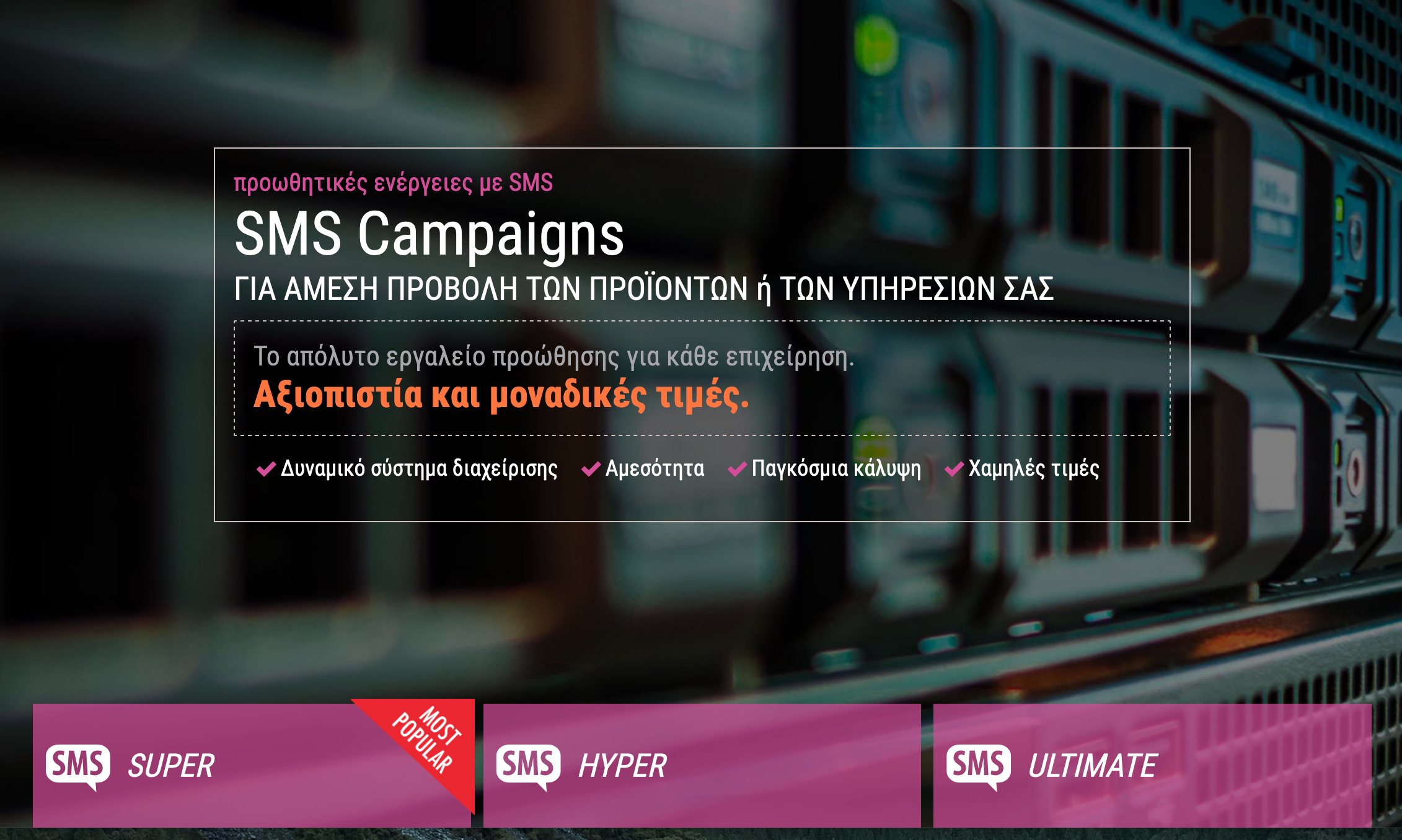
    SMS Advertising That Just Works: A Practical Guide to myeasy Campaigns — SMS campaign

    SMS is one of the fastest, most direct channels to reach customers — especially for time‑sensitive offers, reminders and updates. Open rates are high, messages land straight on a user’s phone and, when used thoughtfully, SMS can lift sales and engagement without the noise of other channels.

    How myeasy makes campaigns simple

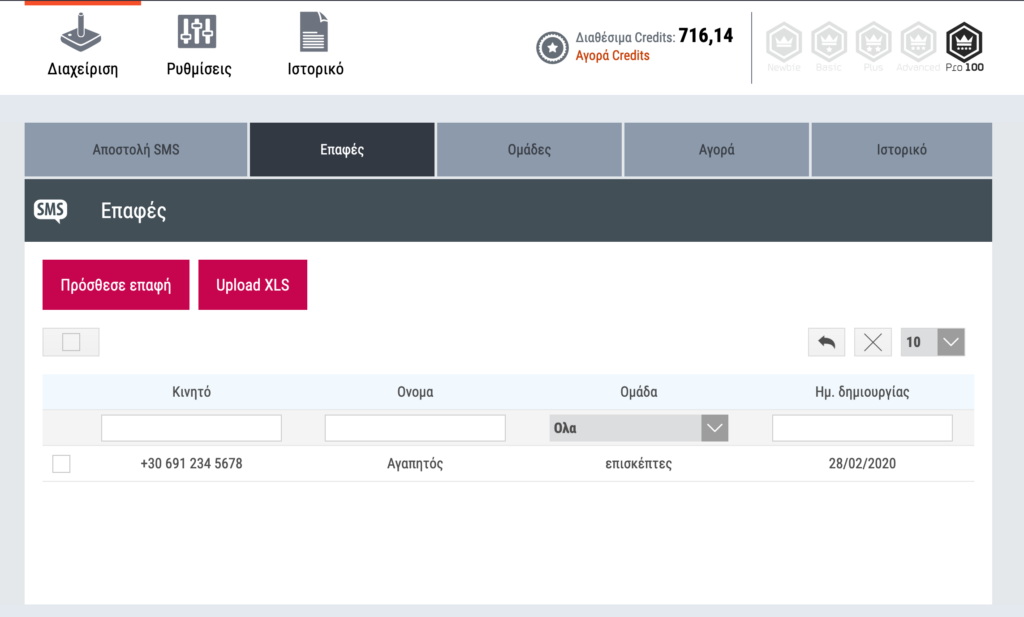
    myeasy offers an entry point for businesses that want to run SMS advertising without complicated tools or extra hardware. You can upload a ready-made XLS file with your contacts and groups, and myeasy will automatically organize and group them for you. In minutes you can be ready to send thousands of messages with a single click — backed by a provider with more than 26 years of experience.

    Upload and organize contacts

    • Upload an XLS file with contacts and groups — no special skills required.
    • Automatic grouping helps you target audiences quickly (e.g., customers, prospects, VIPs).

    Scheduling and automation

    Schedule one‑time broadcasts or set up automated, recurring sends to build a simple, repeatable communication flow. Automation makes it easier to keep customers informed without manual effort.

    Features at a glance

    • Dynamic sender — set the sender name before each send.
    • International coverage — send messages to more than 190 countries and over 400 networks.
    • Detailed history — review the delivery history of your SMS campaigns.
    • Number portability support — recipients receive your message even if they have moved their number to a different network.
    • No special equipment — campaigns are managed from the platform; you only need your contact file and a browser.

    Types of SMS

    • Simple SMS — up to 158 characters (including spaces).
    • Long SMS — composed of two or more consecutive SMS messages for longer content.
    • Unicode SMS — supports all Unicode characters (including Greek); 158 characters per SMS.
    • Personalized SMS — include custom fields (for example recipient name) to make messages feel personal.

    Practical tips for better results

    • Keep messages concise and focused on one clear call to action.
    • Use personalization sparingly to increase relevance (first name, appointment time, order status).
    • Test different send times and message variants to see what converts best.
    • Make unsubscribing easy and honour local regulations — check the legal rules that apply to SMS marketing in your markets.
    • Track performance in the platform’s delivery history and iterate.

    Ready to start your campaign?

    Go to the SMS Campaign section in myeasy to upload your contact list and launch your first broadcast.

    Conclusion

    SMS advertising remains a powerful channel when used responsibly. With myeasy you get a straightforward workflow — upload your XLS, segment automatically, schedule or automate sends, and measure results. For small businesses and marketers who need direct, reliable delivery, SMS campaigns are a practical addition to your marketing mix.

  • easy.gr opens its GitHub — sharing the WHMCS module and developer tools

    easy.gr opens its GitHub — sharing the WHMCS module and developer tools

    GitHub repository page for WHMCS-Easy

    Introduction

    easy.gr is now on GitHub, publishing open-source code to help developers integrate and automate services offered by the company. The first public repository contains the WHMCS module that many partners already use to register, renew and manage domain names from their own websites.

    Why open-source matters for a registrar and service provider

    Putting code on GitHub makes internal tools and integrations visible, reusable and easier to audit. For a company that automates domain registration, renewals and related workflows, open-source releases help:

    • Speed up integration — developers can reuse tested modules instead of building from scratch.
    • Share knowledge — implementation details, configuration examples and readme files shorten the learning curve.
    • Encourage collaboration — others can report issues, suggest improvements or contribute fixes.

    What easy.gr published

    The initial release focuses on the WHMCS module used to manage domain names through easy.gr. The repository includes PHP source code, README files and usage instructions so you can study how the integration works and adapt it to your setup. According to easy.gr, dozens of partners already use this module in production.

    Where to find the code

    Repository

    Explore the WHMCS module on GitHub: github.com/easygrdeveloper/WHMCS-Easy

    How developers and site owners can use it

    Whether you maintain a WHMCS installation or you’re integrating domain services into your own workflow, the repository gives you a practical starting point:

    • Download the PHP module and install it into WHMCS or inspect the code to learn the API calls.
    • Read the provided documentation and readme files for configuration steps and examples.
    • Adapt the module to your environment — add logging, handle edge cases or extend features to match your UX.
    • Report issues or suggest improvements via GitHub so the community and easy.gr can benefit.

    Getting involved and feedback

    easy.gr invites developers to study, reuse and provide feedback on the code. If you have suggestions, discovered a bug or want to share improvements, open an issue or a pull request on the repository. This kind of collaboration keeps integrations robust and up to date.

    Conclusion

    Publishing the WHMCS module on GitHub is a practical move: it accelerates integrations for partners, exposes implementation details for learning, and creates an opportunity for community-driven improvements. Visit the repository to read the code, follow the instructions and join the conversation.

  • Become Our Partner — Integrate Your Internet Service with easy.gr

    Become Our Partner — Integrate Your Internet Service with easy.gr

    Bring your internet service to thousands of users

    Have an idea or an internet service and want it available inside a popular control panel used by thousands of easy.gr customers? Whether you already have your own API or you need technical help to build one, easy.gr invites you to partner with us. Join what the source describes as the largest and fastest-growing unified internet services management system and let your idea reach the audience it deserves.

    Who this is for

    • Developers and companies with API‑driven internet services who want direct distribution to end users.
    • Teams or creators with a service concept that needs integration and exposure through an established control panel.
    • Partners who prefer to focus on their product while relying on easy.gr for distribution and platform integration.

    How integration works

    Integration is straightforward and flexible:

    1. If you have an API: we can connect your existing API to our control panel so users can discover and use your service directly from easy.gr.
    2. If you need help: if you don’t yet have an API, our team can assist in building the interface needed to integrate your service into the panel.
    3. Go live: once integrated, your service becomes discoverable to easy.gr’s user base through the unified management interface.

    Typical steps we follow

    • Initial contact and concept review.
    • Technical assessment: API requirements and integration plan.
    • Implementation: connect the API or build the necessary endpoints with our support.
    • Testing and rollout inside the control panel.

    Why partner with easy.gr

    • Access: integrate directly into a platform used by thousands of customers.
    • Simplicity: users manage services from a single control panel, lowering friction and improving adoption.
    • Support: you can bring a ready API or ask for development help to make integration smoother.
    • Visibility: your service gains placement inside an expanding unified services ecosystem.

    Ready to get started?

    If you want your service inside the easy.gr control panel, reach out and tell us about your idea. Whether you already have an API or need our help to build one, we’ll review the opportunity and guide you through the integration process.

    Conclusion

    Integrating with easy.gr is an opportunity to bring your internet product to a broad audience without building your own user-facing portal. If your idea or service can be delivered via an API — or you’d like our help to create one — consider partnering with easy.gr to give your solution the exposure and management it deserves.

  • nCycle: a radical rethink of the electric bike

    nCycle: a radical rethink of the electric bike

    nCycle electric bike concept with integrated storage and components

    nCycle at a glance

    nCycle is an all-in-one electric bicycle concept that packs storage compartments, an integrated locking system, built-in speakers, headlights, a display and a complete electric drive mechanism — all on two wheels. The project, created by designers Hussain Almossawi and Marin Myftiu, aims to push both aesthetics and technology beyond what you usually expect from a city bike.

    Key features

    What makes nCycle stand out at first sight:

    • Multiple storage spaces incorporated into the frame
    • Integrated locking mechanism for security
    • On-board audio with built-in speakers
    • Front lighting and a display for rider information
    • A complete electric drive system built into the bike

    Design that challenges expectations

    Instead of refining the familiar city-bike silhouette, nCycle takes a different approach. Its bold styling and the integration of components usually added as aftermarket accessories signal a deliberate move toward a cohesive, design-led product. The result is a machine that reads as a piece of industrial design as much as it does a vehicle for urban mobility.

    Technology packed into the frame

    nCycle is more than an electric motor on a bicycle chassis. The concept integrates a range of functional elements — locking, storage, lighting, audio and rider display — into the structure itself. This kind of integration simplifies the user experience and can improve aesthetics, because accessories are not just attached, they’re built in.

    The makers: Hussain Almossawi and Marin Myftiu

    The project credits designers Hussain Almossawi and Marin Myftiu. Their work on nCycle reflects a focus on combining high-level design thinking with engineering to reimagine how an everyday product can look and feel.

    Why this matters

    Concepts like nCycle are useful even if they never reach mass production. They demonstrate possibilities: how urban mobility can be more integrated, secure and pleasurable. For designers and manufacturers, such concepts probe customer expectations and suggest new directions for product development in the e-mobility space.

    Where to find more

    For more details on the project, see the creators’ page:ncycle.net.

    Bottom line

    nCycle isn’t just an electric motor on two wheels. It’s a design experiment that pulls multiple functions into a single, distinctive package. Whether it becomes a mainstream product or remains a concept, it pushes ideas about how an electric bike can be integrated, secure and stylish.