Author: Αλέξανδρος Νικολάου

  • Why website speed matters

    Comparison of a fast and a slow website showing how page speed affects user experience and conversions.

    Speed Is About User Experience, Not Just Performance

    A slow website doesn’t just lose points in a performance testing tool. It loses visitors’ patience, trust and ultimately potential customers. Visitors don’t know whether the problem is the hosting, oversized images or a poorly written plugin. They simply notice that they’re waiting.

    Website speed is one of the few technical aspects that users experience immediately. A fast-loading website feels professional and reliable. A slow one makes the business appear unpolished, even if the products or services are excellent.

    Why Do Websites Become Slow?

    There is rarely a single cause. A slow website may be affected by a heavy theme, oversized images, inefficient code, too many plugins, a slow database or hosting that simply lacks the necessary resources. In many cases, several of these issues exist at the same time.

    Performance optimization starts with proper analysis. Saying “the website feels slow” isn’t enough. You need to identify what’s actually causing the delay—server response time, image loading, JavaScript execution, fonts, the checkout process or even the administration panel.

    The Role of Hosting

    Hosting is the foundation of website performance. If the server is slow to respond, every other step begins with a delay. Even a well-built website will feel sluggish when it’s running on an underpowered or poorly configured hosting environment.

    Disk technology, available memory, CPU resources, account isolation, server-level caching and proactive infrastructure monitoring all play an important role. Cheap hosting often becomes expensive when slow performance starts costing you customers.

    WordPress and Plugins

    WordPress can be extremely fast, but it can also become unnecessarily heavy if it’s overloaded. Every plugin adds code, database queries, JavaScript or CSS. Plugins aren’t inherently bad—but every one of them comes with a performance cost.

    The problem isn’t having plugins. The problem is installing multiple plugins that perform the same task, using abandoned plugins or loading scripts across every page when they’re only needed on one. That’s where performance starts to suffer.

    Images and Media

    Images are often the biggest performance bottleneck. A 4 MB hero banner can dramatically slow down the mobile experience, even if everything else is optimized. Proper compression, responsive image sizes and modern formats such as WebP or AVIF can make a significant difference.

    You don’t need to sacrifice visual quality. You simply need to deliver the right image at the right size. A full-width desktop hero image has very different requirements from a small mobile card. A modern website should look beautiful without loading like a print-ready file.

    Mobile Performance Matters Even More

    Desktop performance tells only part of the story. Your real customer may be browsing on a mobile phone with an average network connection while commuting or between meetings. That’s where website optimization truly matters.

    A fast mobile experience relies on lightweight pages, minimal scripts, efficient caching and carefully designed pop-ups. The faster your site loads on mobile, the more likely visitors are to reach your contact form, shopping cart or checkout page.

    How to Improve Website Performance

    Real optimization isn’t about installing a random caching plugin and hoping for the best. It starts with measuring performance, identifying bottlenecks, removing unnecessary elements and then optimizing caching, images, databases and server configuration.

    • Measure server response time (TTFB) and real page load performance.
    • Compress images and serve them at the appropriate size.
    • Remove unnecessary plugins and scripts.
    • Configure caching at both the application and server level.
    • Optimize your database and investigate slow queries.

    Frequently Asked Questions

    Do I always need a VPS? No. A well-optimized shared hosting environment is more than sufficient for many websites. A VPS becomes worthwhile only when your traffic, resource usage or technical requirements justify it.

    Are speed scores enough? No. Performance testing tools are useful, but real user experience matters far more than a single performance score.

    What’s the first thing to check? Start with server response time and the overall size of your homepage.

    Need help improving your website’s performance?

    Easy can help you identify bottlenecks, optimize your infrastructure and build a faster, more reliable website without unnecessary complexity.

    Learn More at Easy →

  • What Is Web Hosting and How Do You Choose the Right Plan?

    Illustration of web hosting with a server, domain name and website hosted online

    Your Website Needs a Solid Foundation

    Web hosting is where your website lives. It stores your files, images, databases and everything else required to make your site available to visitors on the Internet.

    Choosing a hosting service is not a decision based on saving a few euros. It’s a decision about reliability. If your hosting is slow, unstable or poorly configured, your entire website suffers—no matter how good the design looks.

    How Does Web Hosting Work?

    When someone types your domain name, the DNS directs the request to the server hosting your website. The server processes the request and returns the files your browser needs to display the page.

    This process needs to be both fast and reliable. If the server responds slowly, visitors wait. If it doesn’t respond at all, your website appears offline. Hosting is the invisible infrastructure behind every website visit.

    The Main Types of Hosting

    Shared hosting is suitable for many business websites, blogs and small online stores. Resources are shared with other accounts, but when properly managed it offers an excellent balance between cost and performance.

    A VPS provides dedicated resources and greater control. It’s a better choice for demanding websites, custom applications or WooCommerce stores with growing traffic. A dedicated server is designed for very high workloads or specialized infrastructures.

    Which Features Really Matter?

    Big numbers in hosting plans don’t always tell the full story. What really matters is real-world performance, stability, resource isolation, storage, backups, security and technical support.

    NVMe storage, LiteSpeed or efficient caching, an up-to-date PHP environment, malware protection and reliable backups all make a real difference—not as marketing buzzwords, but when something goes wrong and your website needs to recover quickly.

    Support Is Part of the Product

    Hosting without technical support is only half a service. When your website has a problem, what matters isn’t only who’s responsible. What matters is who can help identify the issue and resolve it quickly.

    Good support doesn’t promise miracles. It asks the right questions, checks the logs, explains things clearly and provides practical solutions. That’s a huge advantage for businesses without an in-house IT team.

    When Is It Time to Upgrade?

    If your website is consistently slow, your admin panel becomes sluggish, your online store struggles during busy periods or you frequently hit resource limits, your current hosting plan may no longer be sufficient.

    An upgrade shouldn’t be driven by panic. It should be based on CPU usage, memory consumption, I/O performance, database activity and actual visitor traffic. That way, you upgrade because you need to—not because you’re worried.

    How Do You Choose the Right Hosting?

    Start by identifying what you’re hosting: a business website, a blog, a WooCommerce store, a booking platform, a custom application or a large portal. Then consider how often it changes, how many visitors it receives and how critical uptime is to your business.

    The right hosting solution is the one that meets today’s requirements while leaving room for future growth. Not necessarily the cheapest. Not necessarily the biggest. Simply the one that best fits your needs.

    Frequently Asked Questions

    Can I start with shared hosting? Yes, if your project is small or medium-sized and your hosting provider offers a reliable infrastructure.

    When do I need a VPS? When you require more resources, custom server configurations or better resource isolation.

    Does hosting affect SEO? Indirectly, yes. Website speed, uptime and user experience all influence search engine performance.

    Looking for the right hosting solution?

    Easy can help you choose the right technical foundation for your website, without unnecessary complexity or time-consuming trial and error.

    Explore Easy Hosting →
  • Hosting for WooCommerce: How to Support Your E‑shop Properly

    Hosting for WooCommerce: How to Support Your E‑shop Properly

    Intro

    If you run or plan to start an e‑shop withWooCommerce, you already know that performance, security and reliability are critical. Everything starts with the right hosting. This article explains why WooCommerce needs stronger hosting than a simple blog and what hosting features to prioritise—using the solutions offered byeasy.gras an example.

    Why WooCommerce needs specialised hosting

    WooCommerce is a powerful but resource‑hungry plugin for WordPress. If your store runs on an underpowered server:

    • Pages and product lists will load slowly, especially with many items.
    • Visitors are more likely to abandon carts due to poor performance.
    • Upgrades or additional plugins can trigger conflicts or errors.

    A hosting package tailored for WooCommerce helps your store runsmoothly, quickly and securely.

    What easy.gr provides for your e‑shop

    easy.groffers WordPress hosting configured to support WooCommerce. Key features mentioned for an e‑shop include:

    • ⚡ SSD drives for faster loading times
    • Free SSL certificates to protect transactions
    • Daily backups and firewall protection
    • One‑click WooCommerce installation
    • Greek support for any questions or issues
    • Easy resource upgrades as your store grows

    Best practices for hosting a WooCommerce store

    1. Choose a server running PHP 8+ and MySQL 5.7+ (or compatible versions).
    2. Ensure there is enough RAM and CPU headroom to handle traffic spikes.
    3. Use caching (for example LiteSpeed Cache) to speed up page delivery.
    4. Add a CDN to improve performance for customers worldwide.
    5. Work with a hosting partner that understands e‑commerce needs, like easy.gr.

    Conclusion

    Hosting can be the difference between an e‑shop that converts customers and one that loses them. Choose infrastructure that prioritises speed, security and scalability so your WooCommerce store can grow without being held back.

    Ready to make your store faster and more reliable?

    Choose easy.gr for WooCommerce hosting that includes SSD storage, free SSL, daily backups and one‑click installation—plus local support and easy upgrades as your shop expands. See plans and details at easy.gr.

  • Europlanet and i‑Metrix Team Up to Bring Acronis Cyber Protection to Hosting Customers

    Europlanet and i‑Metrix Team Up to Bring Acronis Cyber Protection to Hosting Customers

    Europlanet has announced a new strategic collaboration with i‑Metrix to deliver Acronis cybersecurity and data-protection products to the Greek market. The integration aims to strengthen the resilience and continuity of web hosting services by combining Europlanet’s hosting expertise with i‑Metrix’s long-standing security practice and Acronis’ protection platform.

    What this partnership brings

    More dependable hosting: enterprise-grade backup, anti-ransomware protection and business-continuity tools delivered through a proven technology stack.

    Partnership at a glance

    Europlanet and i‑Metrix Team Up to Bring Acronis Cyber Protection to Hosting Customers — c75827ca07c145300d156ea39482c47f

    The collaboration connects three pieces: Europlanet’s hosting infrastructure and service delivery, i‑Metrix’s data protection and security experience, and Acronis’ Cyber Cloud platform. As Acronis describes it, the platform is “a complete solution through which service providers can offer all the cyber protection solutions modern customers require.”

    Who is i‑Metrix?

    i‑Metrix has been active since 1999 in data security and business continuity. With 23 years in the Greek and international market, the company has delivered more than 450 IT projects across public and private sectors. It is overseen by regulatory bodies including the Hellenic Capital Market Commission, the Bank of Greece and GR‑CERT, and has been recognized with a silver award for customer service at the South East Europe Customer Experience Awards.

    Who is Europlanet?

    Europlanet is a modern, full‑service provider covering web/data hosting, web development, domain registration and VoIP telephony. For nearly three decades it has invested in branded servers, partnerships with reliable data centers across Greece, Europe, the US and Canada, and continuous staff training. That experience is now combined with Acronis technology and i‑Metrix know‑how to broaden its hosting and protection offerings.

    What customers can expect

    • Integrated backup and recovery solutions based on Acronis technology to reduce downtime and speed restoration.
    • Advanced anti‑malware and anti‑ransomware protection layered into hosting services.
    • Business‑continuity planning and tools to keep critical services running under adverse conditions.
    • Support backed by decades of operational experience from both Europlanet and i‑Metrix.
    • A focus on accessible, competitively priced services while adopting enterprise-grade protections.

    Why it matters for hosting customers

    Websites and online services are increasingly reliant on continuous availability and data integrity. By integrating Acronis’ protection platform through a trusted partner like i‑Metrix, Europlanet aims to reduce the impact of incidents, speed up recovery and provide customers with clearer options for safeguarding their data and applications.

    Explore the new services

    Find the details of the combined service offerings and hosting plans at https://easy.gr. If uninterrupted operation and stronger protection are priorities for your site or business, this partnership is designed to address them.

    Conclusion

    The Europlanet + i‑Metrix collaboration brings together hosting experience, security expertise and Acronis’ protection tools to deliver more resilient hosting services. For businesses that depend on consistent uptime and reliable data protection, the alliance is a practical step toward better backup, faster recovery and improved operational continuity.

  • Meet the New Managed Hosting: Speed, Security and Zero Compromises

    Meet the New Managed Hosting: Speed, Security and Zero Compromises

    Introduction

    Easy's new generation Managed Hosting is here. The package combines high-performance SSD storage, network-level protections and a set of free management tools aimed at reducing technical overhead for website owners. Whether you run a business site, a blog or an online store, the service bundles several features that are usually optional — and includes them at no extra cost.

    What’s included — free with every package

    • High-speed SSD disks with modern storage technology for faster page loads
    • SSL for secure connections
    • AntiDoS protections and Smart Antivirus to defend against attacks
    • Automated online incremental backup to keep recent versions of your site safe
    • Free dynamic Sitebuilder to build or update pages quickly
    • 24/7 support across all service levels
    • EasyAntispam for clean business email
    • CDN to accelerate content delivery
    • Quick and easy upgrades to scale resources when needed

    What this actually means for your website

    The combination of SSD storage and a CDN focuses on performance: lower latency, faster asset delivery and better user experience — all important for retention and search visibility. Built-in SSL and AntiDoS protections raise the security baseline, while Smart Antivirus and automated incremental backups reduce the operational risk of data loss or compromise.

    Operational benefits

    • Less time spent on maintenance — backups and basic protections are handled automatically.
    • Easier site management — the included Sitebuilder and upgrade paths make routine changes and scaling straightforward.
    • Cleaner communications — EasyAntispam helps keep business mailboxes out of spam folders.

    Who should consider it?

    This Managed Hosting is a fit for small businesses, freelancers and developers who want strong performance and security without assembling separate services. It's also useful for sites that expect traffic growth and need an upgrade path that doesn’t require migration or complex reconfiguration.

    How to get started

    All the free features and package details are listed on the product page. If you want to evaluate the service, visit the Managed Hosting page for specs and next steps.

    Explore Managed Hosting

    Learn more and compare plans at https://easy.gr/hosting/managed-hosting. If you need help choosing, support is available 24/7 to guide the selection.

    Conclusion

    Easy’s new Managed Hosting packages bring several commonly separate services together — SSD speed, CDN acceleration, security layers and automated backups — and offer them as part of a single, managed experience. For site owners who prefer to focus on content and growth rather than infrastructure, it’s a practical option worth evaluating.

  • Coming Back from WHD.global 2015: Parallels Becomes Odin and What We Took Home

    Coming Back from WHD.global 2015: Parallels Becomes Odin and What We Took Home

    Introduction

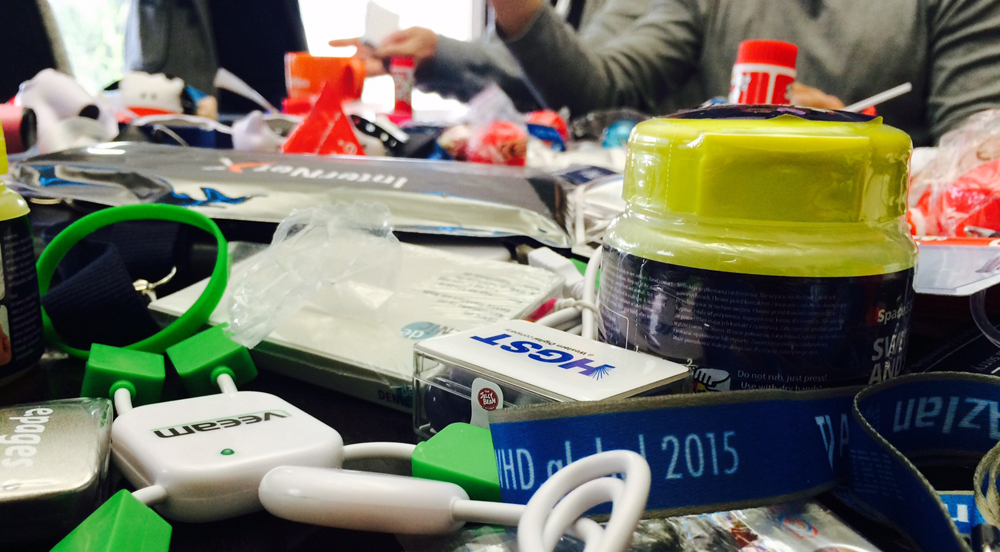
    Coming Back from WHD.global 2015: Parallels Becomes Odin and What We Took Home — whd.global2015

    We just returned from WHD.global 2015, a busy week where the global internet industry gathered to show new ideas, announce plans and build partnerships. The show was packed with announcements, gadgets and conversations — and a few moments that felt like a real turning point for the market.

    Quick highlight

    One of the biggest surprises was Parallels’ overnight transformation into Odin — a change announced on the show floor that signals a broader shift from a single control-panel product toward a wider portfolio of solutions.

    Parallels → Odin: more than a new name

    Perhaps the most talked-about moment at the event was Parallels’ public rebrand toOdin. It was an unusually immediate, exhibition-time announcement: overnight the company presented itself with a new identity. The message was clear — the platform is moving beyond the image of a single "Plesk Control Panel" product and positioning itself as a provider of a broader set of solutions for hosting providers and ISPs.

    gTLDs and the domain market

    Conversations about generic top-level domains (gTLDs) were everywhere. With the gTLD rollout at a peculiar crossroads, many attendees predicted the arrival of more specialized gTLDs aimed at segmenting the market and serving narrower industry verticals. The general view was that increased specialization could help gTLDs grow by addressing specific professions and audiences.

    Security, antispam and product quality

    Security and antispam solutions were recurring themes. Providers highlighted new antispam services, stronger security features and improvements in overall product quality. Those messages came alongside practical demos and giveaways — small but smart gadgets used by exhibitors to engage visitors.

    The atmosphere vs. the local scene

    The general mood on the show floor was upbeat and energetic — a contrast we still feel when looking at the stagnation that affects parts of the Greek Internet market. The difference was striking: international momentum, talks of investment and innovation, and many new ideas in motion.

    What this means for easy.gr

    At easy.gr we won’t stop at admiring gadgets. The energy and the contacts from WHD.global 2015 will be channelled into creative collaborations and service improvements. Our aim is to keep delivering useful, high-quality services that are easy to acquire and even easier to manage — all through the unique easy.gr control panel.

    Conclusion

    WHD.global 2015 left us inspired. From the Parallels→Odin announcement to renewed conversations about gTLDs and security, the show reinforced that the internet ecosystem keeps evolving fast. We plan to bring that momentum back home — improving our services and working with partners to offer better tools for customers in Greece and beyond.

  • When Parallels Became Odin: A Rebrand with Hosting Ambitions

    When Parallels Became Odin: A Rebrand with Hosting Ambitions

    A new name, a familiar mission

    When Parallels Became Odin: A Rebrand with Hosting Ambitions — parallels
    When Parallels Became Odin: A Rebrand with Hosting Ambitions — odin

    Key fact

    On March 25, 2015, at World Hosting Days 2015, Parallels — the company best known for control panel products such as Plesk — announced it would continue its business under the new name Odin. The rebrand expands the company’s positioning while keeping existing services intact.

    The technology world loves a dramatic rename, but not all rebrands are purely cosmetic. When Parallels unveiled its new identity as Odin during World Hosting Days 2015, the announcement was positioned as more than a change of label: it was a statement about direction. Odin would keep the familiar tools partners rely on — Plesk control panels, SiteBuilder, cloud web hosting and webmail management — while broadening its solutions to reach larger and more specialised business groups.

    Why the rebrand matters

    A name change can be a signal of strategic evolution. In Odin’s case the company emphasised three practical points:

    • It is not abandoning existing products or customers — services are preserved and expanded rather than retired.
    • It aims to offer more specialised solutions beyond a single control panel, addressing broader hosting, cloud and business needs.
    • The rebrand was unveiled at a major industry event (World Hosting Days), underlining a global ambition.

    What Odin brings to the table

    Partners and hosting providers who already knew Parallels for Plesk and related tools were reassured that the familiar building blocks remain. At the same time, Odin positioned itself as a provider of a wider portfolio:

    • Plesk and other control-panel technologies as core management tools.
    • Cloud web hosting platforms and hosting resources for growing sites and services.
    • Site building and webmail management integrated into broader hosting stacks.
    • New, more specialised offerings designed to target larger enterprise and business groups.

    What it means for partners in Greece

    As the company re-emerged under the Odin name, existing partnerships continued. The local Platinum partner — one of Odin’s closest allies in the region — highlighted pride in staying alongside the vendor through the change. For partners this generally translates to:

    • Continuity of service and compatibility with existing deployments.
    • Potential access to a broader product set aimed at enterprise and specialised use cases.
    • Opportunities to expand offerings to customers without disrupting current operations.

    Practical steps for hosting providers

    If you’re an ISP, reseller or hosting company that relies on Parallels-era products, consider these practical checks:

    1. Confirm roadmap and support commitments for your current control-panel and hosting stack.
    2. Review new Odin solutions for features that could unlock higher-value customers.
    3. Plan communications to reassure end customers that services and billing are unaffected by the name change.
    4. Evaluate integration or migration paths only if new offerings offer concrete business advantages.

    Conclusion

    Rebrands can be risky, but they can also reflect real strategic shifts. Odin’s transition from Parallels — announced publicly at World Hosting Days on March 25, 2015 — made a clear point: the company intended to broaden its scope while preserving the tools that partners depend on. For hosting providers and partners, the sensible response is to verify continuity, explore new opportunities in the expanded portfolio, and communicate stability to customers as the vendor evolves.

  • Knobs, Buttons & Potentiometers: Tuning Your VPS Like an Instrument

    Knobs, Buttons & Potentiometers: Tuning Your VPS Like an Instrument

    VPS control panel metaphor - knobs and buttons

    Introduction

    Knobs, buttons and potentiometers are physical controls used to shape sound and behavior on an instrument or a piece of hardware. The same idea applies to a Virtual Private Server (VPS): the choices you make about CPU, memory, storage and control interfaces are the knobs that determine how your service performs. This article translates that metaphor into practical advice for tuning a VPS to your website, app or business workload.

    Quick pointer

    If you want to experiment with a VPS and try tuning resources yourself, you can build one quickly here: http://easy.gr/el/hosting/vps

    Why the "knobs and buttons" metaphor works for VPS

    Unlike shared hosting, a VPS gives you dedicated slices of resources. That means you can change configuration parameters and see predictable effects—like turning a knob. Examples include:

    • CPU allocation: more cores or higher clock availability often reduce processing bottlenecks.
    • RAM: increasing memory helps with caching and handling concurrent connections.
    • Storage type and I/O: SSD vs. HDD and IOPS limits affect load times and database performance.
    • Network bandwidth and limits: affect responsiveness for geographically dispersed users and high-traffic pages.

    Which "knobs" should you prioritize?

    Not every site needs every resource turned up to maximum. Prioritize based on the type of workload:

    Static websites and content-focused sites

    • Prioritize storage speed (fast reads) and a modest CPU/RAM balance.
    • Use a CDN for global performance—this can be a more cost-effective knob than dramatically increasing VPS resources.

    Dynamically generated sites and web apps

    • Increase RAM and CPU to reduce response latency under load.
    • Consider separating database and application tiers (two smaller VPS instances tuned to each role).

    Databases and heavy compute tasks

    • Prioritize RAM and storage IOPS to improve query performance.
    • Adjust swapping behavior and filesystem choices where available.

    Control panels: the buttons and dials that make tuning easier

    A good control panel turns low-level server options into easy, reversible actions. Look for panels that let you:

    • Resize resources (CPU, RAM, storage) without long downtime.
    • Manage snapshots and backups for quick rollback.
    • Configure firewall rules, SSH access and simple monitoring.

    These conveniences let you experiment: raise a resource, measure results, and roll back if needed.

    Monitoring: your ears while you tweak

    Tuning without feedback is guesswork. Use monitoring to measure the effects of each change:

    • Track CPU and memory usage trends over time.
    • Measure response times for representative pages or API calls.
    • Watch disk I/O and network throughput during peak periods.

    Small, repeatable tests make it easier to correlate a change with its impact.

    Practical checklist to tune your VPS

    1. Identify the bottleneck: CPU, RAM, disk, or network.
    2. Apply one change at a time (increase RAM, switch to faster storage, tweak caching settings).
    3. Measure performance before and after the change for at least a typical traffic cycle.
    4. Keep backups or snapshots before major alterations.
    5. If growth continues, consider splitting roles (web, db, cache) across multiple instances.

    Start tuning

    Need a VPS to experiment with? Create and configure your own VPS quickly: Build your VPS at easy.gr

    When to call in help

    If tuning reaches infrastructure limits or you need higher availability, consider managed options or professional support. Managed providers can help with capacity planning, monitoring and routine optimizations so you can focus on your application or business.

    Conclusion

    Think of a VPS like a musical instrument: small, thoughtful turns of the knobs often produce the biggest improvements. Start with measurement, make incremental changes through an easy-to-use control panel, and walk back if something doesn’t help. With that approach you’ll get reliable performance while using resources efficiently.